
Planning a Maui vacation is easier when you make a few important decisions before you arrive: where to stay, how to get around, which activities need advance reservations, and how much you realistically want to fit into each day.
These Maui Travel Tips are designed for first-time and returning visitors who want a smoother trip without overplanning. The guide covers airports, weather, transportation, South Maui, road awareness, packing, Haleakala planning, and practical ways to explore Kihei and Wailea.
The main idea is simple: plan Maui by region and by type of day. A local beach day in Kihei needs different transportation and preparation from a full-day trip to Haleakala or East Maui.
Maui Travel Tips at a Glance
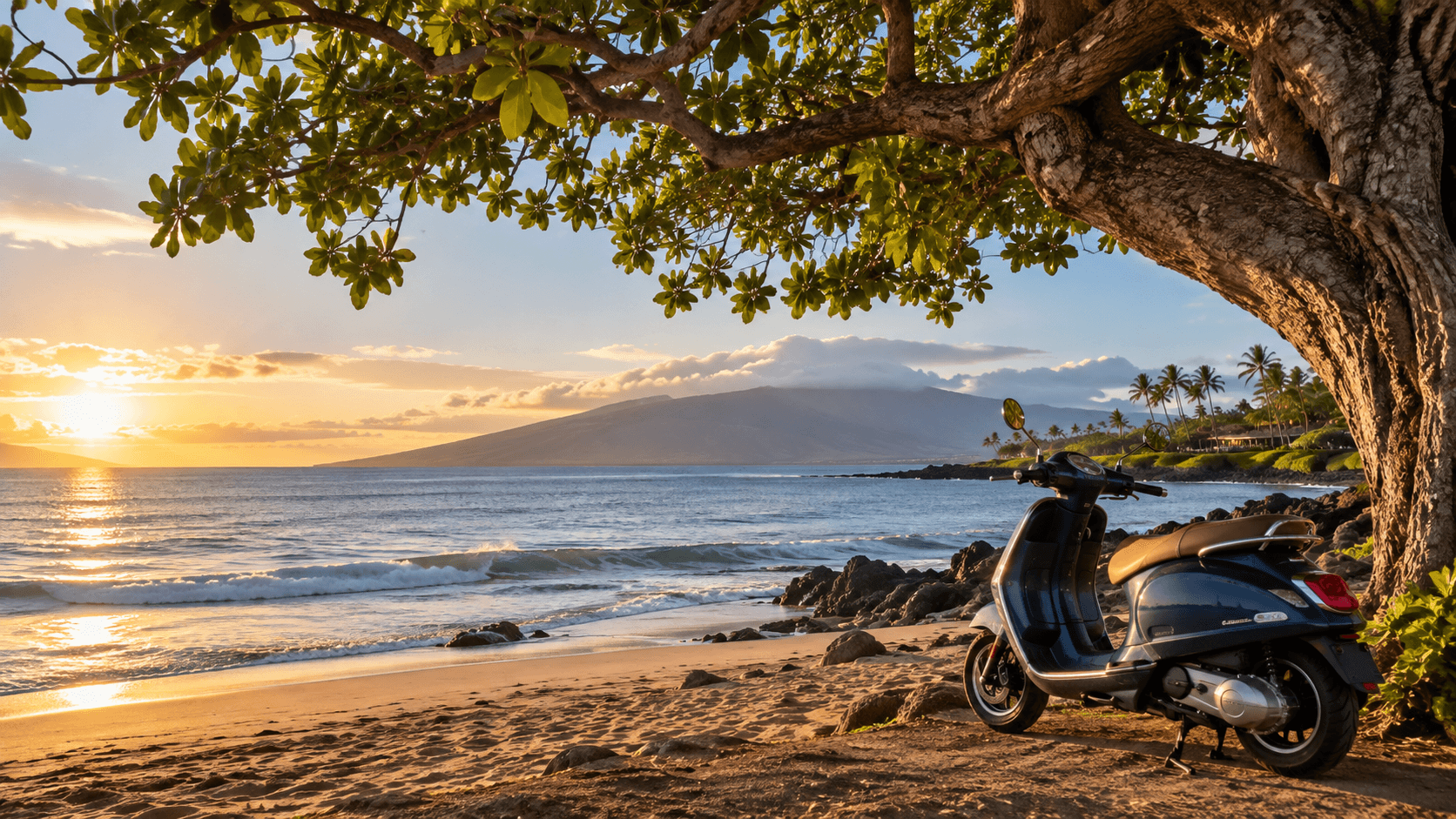
- Most visitors arrive through Kahului Airport (OGG).
- Choose accommodation based on where you expect to spend most of your time.
- Expect different weather on the coast, Upcountry, East Maui, and at Haleakala.
- Group activities by area instead of crossing the island repeatedly in one day.
- Reserve popular activities and limited-entry experiences before arrival when possible.
- Match your transportation to the day: car, tour, bus, rideshare, walking, scooter, or moped.
- Start popular beach and sightseeing days earlier for more flexibility.
- Check weather, road conditions, parking rules, and reservation requirements before longer trips.
- Leave open time in your schedule for weather changes and spontaneous stops.
Choose the Right Part of Maui to Stay
Where you stay affects more than the hotel itself. It also affects how much time you spend in traffic, how easy it is to reach beaches and restaurants, and which transportation options make sense.
Kihei and South Maui
Kihei is a practical base for travelers who want beaches, restaurants, grocery stores, shopping, and easy access to Wailea. If several days of your trip will focus on South Maui, staying nearby can reduce unnecessary driving.
If you are still comparing areas, use the Best Hotels in Maui guide to think about accommodation together with location and transportation, rather than choosing a hotel only by nightly rate.
Wailea
Wailea is directly south of Kihei and is known for its resort environment, beaches, dining, and landscaped coastal areas. It works well for travelers who want a resort-focused stay while remaining close to Kihei.
West, Upcountry, and East Maui
West Maui, Upcountry, and East Maui each create a very different itinerary. Upcountry brings cooler elevations and access toward Haleakala, while East Maui requires more time for the drive toward Hana. The best base depends on the places you truly plan to visit, not just how close they look on a map.
Fly Into the Right Maui Airport
Kahului Airport (OGG) is Maui’s main airport. Official Maui travel information also lists smaller commuter airports at Kapalua and Hana. Most visitors who stay in Kihei or Wailea arrive through OGG.
| Destination | Approximate drive from OGG |
| Kihei | 25 minutes |
| Wailea | 35 minutes |
| Kaanapali | 50 minutes |
| Kapalua | 60 minutes |
| Hana | 2 hours 30 minutes |
| Haleakala | 1 hour 50 minutes |
These are planning estimates from GoHawaii’s Maui travel information, not guaranteed travel times. Traffic, weather, road work, stops, and your exact destination can change the journey.
Arrival-day tip
Avoid scheduling a major activity immediately after landing. Give yourself time to collect luggage, arrange transportation, check in, buy basic supplies, eat, and settle into the island before committing to a long drive or timed reservation.
Understand Maui Weather and Microclimates
Maui does not have one uniform weather pattern. The island has several microclimates, so conditions can change significantly between South Maui, East Maui, Upcountry, and Haleakala.
GoHawaii notes that the leeward side, including Kihei and Wailea, is generally drier, while the windward side is wetter. Higher elevations are cooler than the coast. Before a longer day trip, check the forecast for the specific area you plan to visit.
For South Maui riding conditions and practical two-wheel planning, see the Maui Weather Guide for Scooter Riders.
Decide How You Will Get Around Maui
There is no single transportation option that is best for every Maui visitor. The right choice depends on where you are staying, how many people are traveling, how far you plan to go, and what you want to do that day.
| Your plan | Transportation worth considering |
| Airport arrival with luggage | Rental car, taxi, transfer, or rideshare |
| Long-distance sightseeing | Rental car or organized tour |
| Kihei and Wailea local exploring | Scooter or moped for eligible riders, car, bus, or rideshare |
| Occasional short trips | Rideshare or taxi |
| Flexible low-cost travel | Maui Bus where the route fits |
| Haleakala sunrise | Suitable vehicle or tour plus required reservation |
GoHawaii lists rental cars, taxis, shuttles, tour buses, and public transportation among Maui’s options and recommends planning ahead for vehicle availability. If cost is part of your decision, compare the full trip rather than the advertised daily price. Our guide on how to avoid overpaying for transportation in Maui explains how parking, fuel, fees, and repeated rides can change the real cost.
Exploring Kihei and South Maui by Scooter or Moped
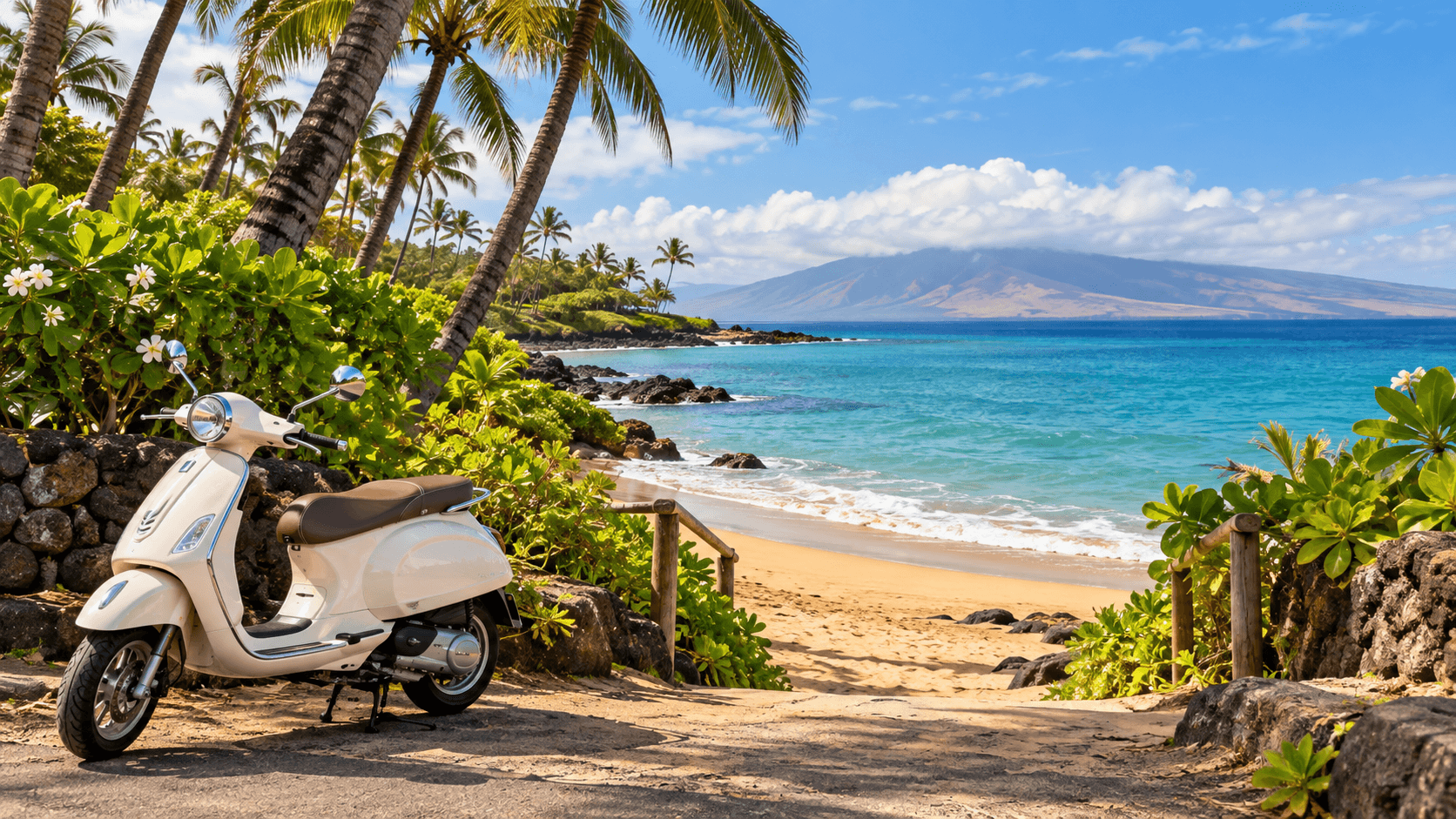
For travelers staying around Kihei and Wailea, a scooter or moped can be a useful option for shorter local trips. That does not mean two wheels are the right choice for every Maui itinerary. The vehicle should match the rider, route, weather, distance, and local requirements.
When local scooter or moped travel can make sense
A local South Maui day may include breakfast in Kihei, a beach stop, lunch along South Kihei Road, another stop near Wailea, and a return to Kihei later in the day. These are very different transportation needs from a full-day trip to Hana, Haleakala, or another distant area.
Maui Scooter Shack’s scooter and moped rentals in Kihei include options intended for local Kihei and Wailea exploring, and rentals include a complimentary riding lesson. Always confirm the current rental, licensing, and route requirements for the specific vehicle before booking.
First-time rider? Learn the basics before leaving
If you have never ridden before, review the Rental Drivers Training Guide before your rental. It explains basic controls, braking, acceleration, turning, fuel awareness, and road safety in a more focused format.
Prefer a structured experience?
Visitors who want local route guidance instead of planning every stop independently can also look at Maui Scooter Shack’s guided scooter tours for a more structured South Maui experience.
| Ready to explore Kihei and South Maui?Choose a scooter or moped that fits your local plans, get comfortable with the controls before leaving, and explore at your own pace.Book Your Ride |
Plan Maui Days by Area, Not Just Distance
One of the easiest ways to make a Maui vacation tiring is to build an itinerary that jumps between distant regions all day. A better approach is to group nearby experiences together.
Example: South Maui day
Breakfast in Kihei → beach time → lunch → Wailea or another nearby stop → sunset.
If you want ideas that naturally fit together, the 10 Best Things to Do in Kihei guide can help you build a local day without unnecessary cross-island driving.
Example: Beach-hopping day
If your goal is mostly coastline, use the 5 Beaches to Drive to in Maui from Kihei guide to compare local stops and build a simple South Maui beach day.
Example: Longer-distance day
Haleakala, Upcountry, the North Shore, or East Maui deserve their own planning window. Separating local and long-distance days gives you more time at each destination and makes it easier to choose the right transportation.
Reserve Popular Maui Experiences Before Your Trip
Some Maui experiences need advance planning. Haleakala sunrise is the clearest example.
The National Park Service currently requires a reservation for vehicles entering the Summit District for sunrise between 3:00 AM and 7:00 AM. Reservations are released up to 60 days in advance, and a portion is released two days in advance. The sunrise reservation is separate from the park entrance fee.
Check the current rules on the official Haleakala National Park sunrise page before you go because conditions and visitor requirements can change.
Pack for More Than Beach Weather
Beachwear is useful, but it is not enough for every Maui itinerary. Pack for the specific places you plan to visit.
- Lightweight clothing for coastal days
- Comfortable walking shoes or sandals
- Sun protection and sunglasses
- Reusable water bottle
- Phone charger or power bank
- Light layer for evenings
- Warmer layers for Haleakala and other high elevations
- Identification, payment method, and any required medication
Official Maui weather guidance notes that Haleakala can be much colder than the coast. Check GoHawaii’s Maui weather information and the National Park Service forecast before heading to higher elevations.
Start Beach and Sightseeing Days Earlier
Starting earlier can make a Maui day easier without making it feel rushed. Earlier hours may give you more flexibility with parking, traffic, heat, and how long you choose to stay at each stop.
For a beach day, an early start also leaves room to adjust if ocean conditions, weather, or crowds are different from what you expected. The point is not to schedule every minute; it is to create extra space in the day.
Drive With Patience and Check Road Conditions
Maui rewards patient driving and riding. Official visitor guidance encourages travelers to drive slowly, avoid tailgating, let locals pass when safe, and use extra care on narrow roads and one-lane bridges.
Before a longer trip, check your route, weather, fuel, road conditions, daylight, and whether the vehicle fits the road. Do not choose a route only because it looks short on a map.
If you plan to drive or ride during your stay, read What Tourists Should Know About Maui Road Rules before heading out.
Respect Maui’s Ocean and Natural Areas
Maui’s beaches and natural areas are a major part of the experience, but conditions can change quickly. Read posted warnings, follow lifeguard guidance where available, and choose ocean activities that match your ability.
Responsible travel also means using approved trails, respecting private property, giving wildlife space, disposing of waste properly, and following local and park rules. These places are part of local communities, not just sightseeing stops.
Keep Part of Your Maui Itinerary Flexible
Leave room for the day to change. A beach may be better than expected, weather may shift, traffic may slow your plans, or you may simply want to stay longer at lunch.
A practical Maui itinerary often has one or two priorities per day rather than six rigid stops. This works especially well in Kihei and South Maui, where beaches, food, shopping, parks, and scenic stops can be combined without long-distance driving.
Travelers trying to keep costs under control can also use the budget-friendly Maui trip guide to balance transportation, accommodation, food, and paid activities.
Practical Maui Travel Mistakes to Avoid
Trying to see the whole island every day
Repeatedly crossing Maui can turn a vacation into a driving schedule. Group nearby attractions instead.
Choosing accommodation without thinking about location
A cheaper room may cost more in time and transportation if it is far from most of your plans.
Assuming beach weather equals summit weather
Coastal Kihei and high-elevation Haleakala can have very different temperatures and conditions.
Using one transportation option for every day
A local Kihei day and a long-distance island day have different needs. Match the vehicle or service to the itinerary.
Leaving major reservations until the last minute
Limited-entry experiences can sell out. Check requirements before your trip instead of assuming you can book after arrival.
Packing every day too tightly
Weather, traffic, parking, and spontaneous stops can disrupt an overplanned schedule. Leave breathing room.
Final Maui Travel Tips
The best Maui travel plan is not the one with the most stops. It is the one that lets you spend more time enjoying the island and less time managing logistics.
Choose a base that fits your interests. Plan days by region. Use transportation that suits the distance and activity. Check weather and road conditions before longer trips. Reserve experiences that require advance planning, then leave enough free time for Maui to feel like a vacation.
If several of your days will be centered around Kihei, Wailea, and South Maui, Maui Scooter Shack offers local scooter and moped rentals, complimentary riding instruction with rentals, and guided experiences for visitors who want another way to explore the area.
| Plan Your South Maui RideCompare current rental options and choose a scooter or moped that matches your local itinerary.View Scooter & Moped Rentals |
Frequently Asked Questions About Traveling to Maui
What are the most important Maui travel tips for first-time visitors?
Choose accommodation based on where you will spend most of your time, plan transportation around each day’s itinerary, group activities by region, prepare for different weather at different elevations, and leave open time instead of overbooking every day.
What airport do most visitors use for Maui?
Most visitors arrive through Kahului Airport (OGG), Maui’s main airport. Smaller commuter airports also operate at Kapalua and Hana.
How far is Kihei from Kahului Airport?
GoHawaii lists the drive from Kahului Airport to Kihei at about 25 minutes. Actual travel time can vary with traffic, road work, and your exact destination.
Do I need a rental car for my entire Maui vacation?
Not necessarily. A car is useful for many longer island trips, but local days around Kihei and Wailea may also work with a bus, rideshare, walking, or a scooter or moped for eligible riders. Match transportation to your itinerary.
Is a scooter or moped useful in Kihei?
For eligible riders, a scooter or moped can be practical for shorter local trips between Kihei beaches, restaurants, shopping areas, and nearby Wailea. It should still match your riding experience, route, weather, and current rental requirements.
Do I need a reservation for Haleakala sunrise?
Yes. The National Park Service currently requires a vehicle reservation for sunrise access to the Summit District between 3:00 AM and 7:00 AM. Check the official park page before your visit for current rules.
What should I pack for Maui?
Pack light summer clothing for coastal days, sun protection, comfortable footwear, water, and a light layer. Bring warmer clothing for Haleakala and other higher-elevation areas, where conditions can be much colder than the beach.
Related Maui Scooter Shack guides: