
Kihei is usually the better choice if you want condos, casual restaurants, a wider range of prices and easy access to everyday businesses. Wailea is usually the better choice if you want a full-service resort, quieter surroundings, golf, spas and upscale dining.
Both are in South Maui, on the same stretch of coastline. Kihei sits directly north of Wailea, and the two communities share the same beaches, sunsets and general weather. Neither one locks you out of the other.
The real decision is not which town is nicer. It is what kind of vacation you want once you get there, and how often you plan to leave your accommodation.
Kihei vs Wailea at a Glance
| Factor | Kihei | Wailea |
|---|---|---|
| Overall atmosphere | Casual, lived-in, mixed residential and visitor | Planned resort community, landscaped and quiet |
| Accommodation style | Condos, vacation rentals, smaller hotels | Large full-service resorts, luxury condos |
| Typical traveler | Repeat visitors, families, longer stays, value seekers | Couples, special occasions, resort-focused travelers |
| Beaches | Kamaole Beach Parks I, II and III; Keawakapu Beach | Wailea Beach, Ulua Beach, Mokapu Beach, Keawakapu Beach |
| Restaurants | Many independent and casual spots along South Kihei Road | Resort restaurants and upscale dining rooms |
| Shopping | Strip centers, grocery stores, surf and beach shops | The Shops at Wailea and resort boutiques |
| Walkability | Good within a block or two of South Kihei Road | Good inside a resort cluster, limited between clusters |
| Parking | Public beach park lots and street parking | Resort lots plus public beach access lots |
| Luxury experience | Limited | Strong |
| Budget flexibility | Wide range | Narrower, premium-weighted |
| Families | Kitchens, grocery access, several beach parks | Resort pools, kids’ programs, on-site convenience |
| Couples | Casual and flexible, more dining variety | Quieter, more romantic, amenities on site |
| Getting around | Frequent short local trips, several options | Mostly resort-centered, car or shuttle for distance |
| Best for | Exploring South Maui on your own schedule | Staying put and being looked after |
What Is the Main Difference Between Kihei and Wailea?
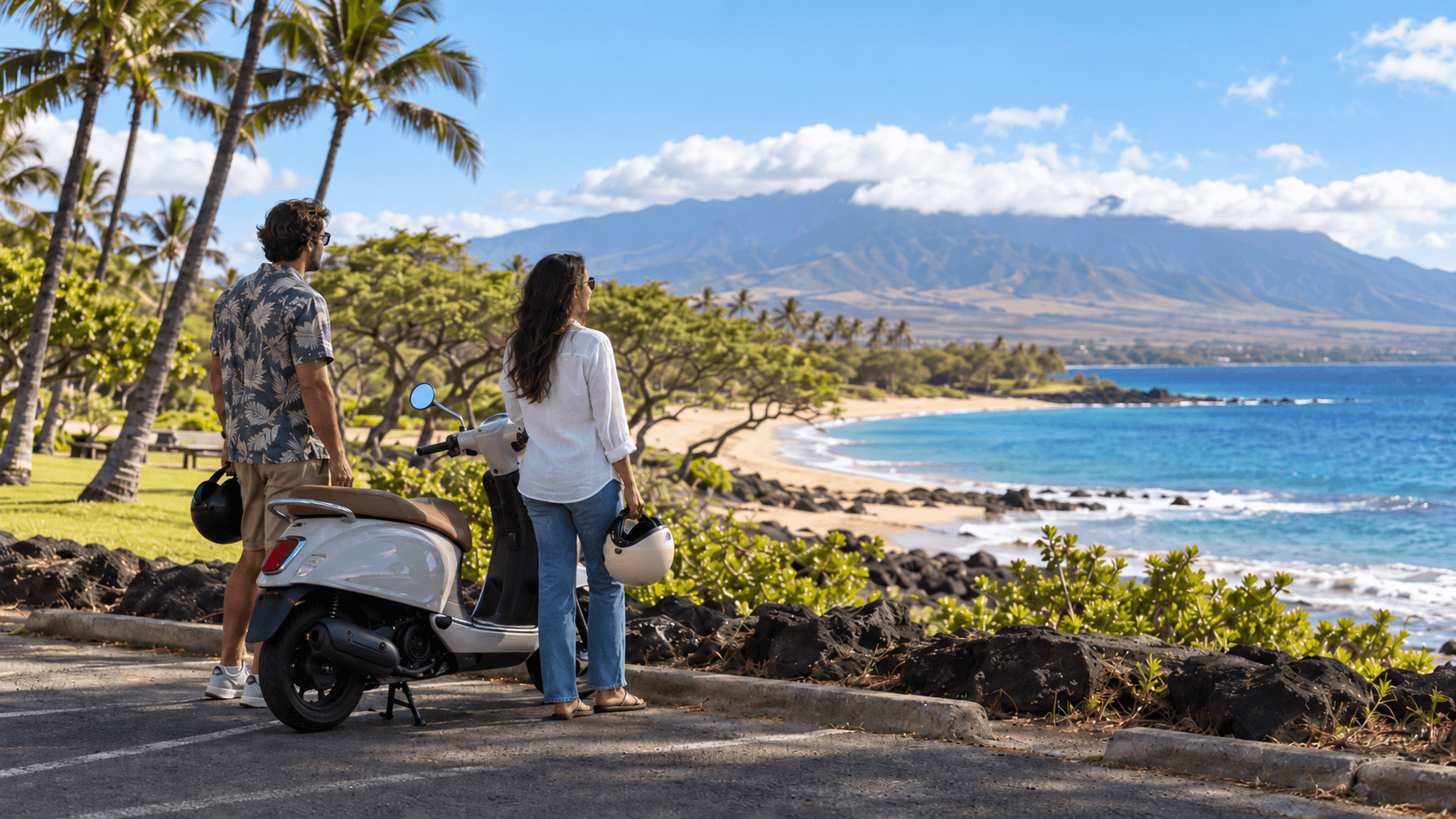
The main difference is how each place was built. Kihei grew over time as a mix of homes, condos and small businesses. Wailea was master-planned as a resort district, and it still looks and functions that way.
That single fact shapes almost everything else.
In Kihei, the buildings sit close to the road. Condo complexes, taco shops, a dive shop and a grocery store can share the same block. Most of what you need is outside your accommodation, which means you leave it often. A morning might include a beach park, a coffee stop and a grocery run, all within a few minutes of each other.
In Wailea, the resorts sit back from the road behind landscaping, and each one contains restaurants, pools, shops and beach access. Much of what you need is inside where you are staying. Many guests leave the property once or twice a day rather than five times.
This also changes how the two areas feel in the evening. Kihei stays somewhat active after dark, with restaurants and bars along South Kihei Road. Wailea quiets down earlier, and the activity tends to be inside resort restaurants and lounges rather than out on the street.
Neither pattern is better. They just suit different people. If the idea of being handed a towel at a pool sounds like the vacation, Wailea is built for that. If the idea of picking a different beach park and a different lunch spot every day sounds better, Kihei is built for that.
What Is It Like to Stay in Kihei?
Kihei is a long coastal town in South Maui, built mostly along South Kihei Road. It has more accommodation variety than almost anywhere else on the island, and the atmosphere is casual rather than polished.
South Kihei Road is the spine. Nearly everything visitors use sits on it or a short distance off it. Condos, restaurants, grocery stores, beach parks and shops all line the same corridor. Once you understand that road, you understand how Kihei works.
Accommodations lean toward condos. Many are older buildings that have been updated inside. A kitchen, a washer and a lanai are common, which matters more on a longer trip than most people expect.
Food is varied and mostly casual. Kihei has everything from takeout plate lunch to sit-down restaurants, and several places open early for people heading to the beach.
Beach access is spread out. Kamaole Beach Park I, II and III are the best known, each with restrooms and parking. Keawakapu Beach sits at the southern end, near the Wailea boundary.
Everyday errands are simple. Grocery stores, pharmacies and gas stations are nearby, which is a real advantage on a two-week trip.
Potential downsides of Kihei
The town is long and linear, so “staying in Kihei” can mean very different things depending on where you land. North Kihei and South Kihei feel distinct, and the distance between them is not walkable in a casual sense.
Some condo buildings sit directly on a busy road. Older properties vary in how recently they were renovated. And because Kihei is not a single resort campus, you will not find a front desk handling everything for you.
If you are still narrowing down where to base yourself, our guide to places to stay on Maui covers the wider island picture.
What Is It Like to Stay in Wailea?
Wailea is a planned resort community in South Maui, directly south of Kihei. It was developed as a single district, and it is noticeably quieter and more manicured than the areas around it.
Resorts are the main accommodation type. Wailea is built around large full-service hotels and upscale condo communities, most of them close to the shoreline.
The landscaping is part of the product. Wide lawns, maintained paths and ocean-view walkways connect much of the resort area. The coastal path between several Wailea beaches is a genuine highlight and costs nothing to use.
Golf and spas are concentrated here. South Maui’s golf courses and resort spas are clustered in and around Wailea rather than spread across the region.
Dining skews upscale. Resort restaurants and standalone fine dining dominate, and reservations matter more here than in Kihei.
Beaches are calmer in tone. Wailea Beach, Ulua Beach and Mokapu Beach each have public access and parking, but they are fronted by resorts rather than by public parks.
Potential downsides of Wailea
Convenience stores and everyday errands are harder. There is less of the ordinary infrastructure that makes a long stay easy, so a grocery run usually means driving north into Kihei.
The area is quiet at night. For some travelers that is the entire point. For others, particularly families with teenagers or visitors who want variety in their evenings, it can feel limited.
Spontaneous dining is also harder. Walking out and finding a table somewhere is more realistic in Kihei than in Wailea, where popular restaurants book up.
Kihei vs Wailea Beaches
Kihei and Wailea sit on the same coastline, so the water is the same. The difference is in how the beaches are set up and what surrounds them.
Kihei beaches are public parks. The Kamaole Beach Parks are municipal parks with their own lots, restrooms, showers and grassy areas. They are easy to pull into, easy to leave, and well suited to beach-hopping. Kamaole I, II and III sit close together along South Kihei Road, which makes it practical to try more than one in a day.
Wailea beaches are resort-fronted. Wailea Beach, Ulua Beach and Mokapu Beach are public, as all Hawaii beaches are, but each is reached through a marked public access point with a dedicated lot. Those lots are smaller than the Kihei park lots and fill earlier in the day. The payoff is a quieter stretch of sand with resort facilities nearby.
Keawakapu Beach sits between the two. It runs along the boundary area between Kihei and Wailea, which makes it a convenient option no matter which side you stay on. It is a long sandy stretch and a common sunset stop.
Which beach style suits which traveler
| If you want to… | Lean toward |
|---|---|
| Visit several beaches in one day | Kihei’s Kamaole parks |
| Set up for a full day with facilities nearby | Either, depending on your base |
| Find a quieter stretch of sand | Wailea’s beaches |
| Walk between beaches | Wailea’s coastal path |
| Bring kids with gear and a cooler | Kihei’s beach parks |
| Catch sunset without a long drive | Keawakapu Beach |
One practical note that applies to both: ocean conditions on Maui change with the season, the swell and the time of day. Check posted signs and local conditions before you get in the water, and do not assume a beach behaves the same way in February as it did in August.
Accommodation: Kihei Condos vs Wailea Resorts
Kihei’s accommodation market is dominated by condos and vacation rentals. Wailea’s is dominated by full-service resorts. This is the single biggest practical difference between staying in one or the other.
What a Kihei condo gives you
A kitchen changes a trip. Breakfast at home, a packed cooler and a few dinners in can reshape your daily routine and your spending, especially on a stay longer than four or five nights. Laundry matters too, because it means packing less and rinsing salt out of things.
Condos also tend to be larger than hotel rooms for the same money, with separate bedrooms. Families with young children often find this more workable than a single room.
What you give up: no front desk solving problems at 10pm, no daily housekeeping in most cases, no concierge, and amenity quality that varies building to building.
What a Wailea resort gives you
Services and consistency. Pools, on-site restaurants, beach service, activity desks, spas and staff who handle things. For a shorter trip or a special occasion, that convenience is often the whole point.
What you give up: kitchen flexibility, generally a higher nightly cost, and resort fees and parking charges that can add up in ways the headline rate does not show.
Relative positioning rather than prices
Rates move constantly on Maui by season, by property and by how far ahead you book, so treat any specific number you read online as a snapshot rather than a rule. In broad terms, Kihei offers a wider span from modest to premium, while Wailea concentrates in the upper range. There are expensive condos in Kihei and relatively more accessible options in Wailea, so the overlap is real.
The point most guides miss
The exact address matters more than the town name. A condo at the far north end of Kihei and a condo near Keawakapu Beach are both “Kihei,” but they produce different vacations. Before booking, pull up the specific property on a map and check what is actually within a few minutes of it: a beach park, a grocery store, somewhere to eat. That check tells you more than any Kihei-versus-Wailea comparison, including this one.
Dining and Shopping
Both areas have good food. The difference is in density and style, and density is what shapes your day.
Kihei has more restaurants packed into a smaller area. Most sit along or just off South Kihei Road, which means that deciding where to eat is a short trip rather than a plan. The range runs from takeout and food trucks to full sit-down restaurants. Several strip centers hold a handful of options in one stop, so a group that cannot agree can split up and still eat together.
Wailea’s dining is more destination-oriented. Resort restaurants and standalone upscale spots carry the area, and the quality at the top end is high. Dinner tends to be an event rather than an afterthought, and reserving in advance is close to necessary for the better-known places.
For shopping, Kihei covers practical needs: grocery stores, drugstores, surf and beach shops, convenience stores. Wailea centers on The Shops at Wailea and resort boutiques, which lean toward clothing, jewelry and gifts rather than groceries.
A pattern worth knowing: plenty of Wailea guests drive into Kihei for groceries and casual meals, and plenty of Kihei visitors drive into Wailea for a nice dinner. The traffic runs both ways, which is a reminder that staying in one does not cut you off from the other.
If you want more ideas for filling the days between meals, we have a roundup of unique things to do around Kihei.
Which Is More Walkable: Kihei or Wailea?
Neither area is walkable end to end. Both are walkable in pockets. Which one works better on foot depends entirely on where you book.
Kihei is long and linear, stretching several miles along the coast. If your condo sits near a cluster of restaurants and a beach park, you can walk to dinner and walk to the sand, and you may barely move the car some days. If it sits on a quiet stretch between clusters, almost every trip becomes a drive.
Wailea is more compact, and the resort area has genuinely pleasant walking paths, including a coastal route linking several beaches and resorts. Within a resort cluster, walking is easy and often nicer than driving. Between clusters, or out to anything beyond the resort district, it is not practical.
So the honest answer is this: Wailea is more pleasant to walk within, and Kihei gives you more places worth walking to, provided you book in the right spot.
The thing to check before you book is simple. Open a map, drop a pin on the property, and look at what falls within a few hundred yards. That radius is your real walkability, and it varies far more within each town than it does between them.
Parking and Getting Around Kihei vs Wailea
Most visitors to South Maui use a rental car for at least part of their trip. But how much you actually need one depends on how far you plan to range.
Parking in Kihei is mostly public: beach park lots, street parking and shopping center lots. The beach park lots fill up on busy mornings, particularly at the Kamaole parks, so arriving early helps. Most condo buildings include parking for guests, though some older buildings assign one space per unit.
Parking in Wailea is split between resort lots and public beach access lots. Resorts commonly charge for parking, including self-parking, and that charge is usually separate from the room rate. The public access lots serving Wailea Beach, Ulua Beach and Mokapu Beach are smaller and fill early.
How people actually get around
Rental cars make sense if you plan to drive to Hana, up Haleakala, over to West Maui or to the airport regularly. For long island trips, there is no real substitute.
Walking covers short distances within a resort cluster in Wailea or within a dense stretch of South Kihei Road.
Rideshare and taxis operate in South Maui but availability varies by time of day, and costs add up quickly if you are taking several trips daily.
The Maui Bus serves parts of South Maui on fixed routes. Check current routes and schedules before relying on it, since service changes.
Scooters and mopeds suit a specific pattern: frequent short local trips around Kihei, Wailea and nearby South Maui beaches. They park easily, which matters at crowded beach lots, and they work well for someone whose days are mostly within the South Maui corridor. They are not the right tool for long highway drives, for carrying a family of four, or for riders uncomfortable in traffic.
The practical question is not which option is best overall. It is how many trips you will take in a day, and how far each one goes. Someone leaving South Maui every day has different needs from someone who plans to stay inside it.
Is Kihei or Wailea Better Without a Rental Car?
Kihei is generally easier without a rental car, because more of what visitors need sits within a short distance along South Kihei Road. Wailea can work car-free if you are staying at a resort and plan to spend most of your time on the property.
The answer depends on four things:
Where exactly you are staying. A Kihei condo near a beach park and a cluster of restaurants is very different from one on an isolated stretch. In Wailea, a resort with several on-site restaurants makes car-free far more realistic.
How you plan to eat. If you want a different restaurant each night, Kihei’s density helps. If you are happy with resort dining, Wailea handles it.
Which beaches you want. Staying near Keawakapu Beach or the Kamaole parks means beach access without driving. Staying somewhere without a beach within walking distance means arranging transport every time.
How often you plan to leave South Maui. This is the deciding factor. A trip with Hana, Haleakala and West Maui on the itinerary needs a car. A trip that stays in the South Maui corridor may not.
Many visitors land somewhere in the middle: car-free for most days, with transport arranged for the occasional longer outing. We cover that approach in more detail in our guide to getting around Kihei without a car.
Kihei vs Wailea for Couples
Wailea is the stronger choice for couples who want a romantic, low-effort trip. Kihei is the stronger choice for couples who want flexibility and variety.
Wailea delivers the things couples trips are often built around: quiet resorts, spa appointments, beachfront dinners and sunsets without a crowd. If the trip is a honeymoon, an anniversary or a first visit together, the resort experience does a lot of the work for you.
Kihei suits couples who would rather explore than settle in. More restaurants to try, more beaches within easy reach, more freedom to change plans at breakfast. Couples on longer stays often prefer it, partly because a kitchen and a lower nightly rate make a two-week trip more sustainable.
A middle option worth considering: properties near the Kihei and Wailea boundary, around Keawakapu Beach. You get Wailea’s quieter beaches and Kihei’s restaurants and shops without committing fully to either.
Choose Wailea for a short, special-occasion trip where being looked after is the point.
Choose Kihei for a longer trip, a more active itinerary, or a second or third visit to Maui.
Kihei vs Wailea for Families
Both work well for families, and the better fit depends on the ages of your kids and how your family likes to spend a day.
Kihei suits families who want space and self-sufficiency. Condos with separate bedrooms mean parents are not whispering after 8pm. A kitchen covers picky eaters, early breakfasts and the snack supply. Grocery stores are close. The Kamaole Beach Parks have restrooms, showers, lifeguards and grassy areas, which makes a long beach morning much easier with small children.
Wailea suits families who want the resort to handle it. Pool complexes, kids’ programs, on-site dining and beach service remove a lot of daily logistics. For families with a shorter trip or a wide age range, having everything in one place can be worth more than the extra space.
A few practical considerations:
- Teenagers often prefer Kihei, where there is more to walk to and more going on in the evening.
- Toddlers often do better in a condo, where naps and bedtimes do not disrupt everyone.
- Multi-generational groups frequently book a Kihei condo for space, then plan a couple of days around Wailea’s beaches.
- Longer stays tip toward Kihei, mostly because of laundry and the kitchen.
Neither area is a bad choice for a family. The deciding question is whether you want to run your own days or have them run for you.
Kihei vs Wailea for Budget-Conscious Travelers
Kihei generally offers more budget flexibility, mainly because it has a wider range of accommodation types and more casual places to eat.
But nightly rate is only one part of what a trip costs, and it is the part people focus on to the exclusion of everything else. Four other factors move the total more than most travelers expect.
Kitchen access. Eating two meals a day out for a week costs considerably more than eating one. A condo kitchen is not about cooking elaborate dinners; it is about breakfast, coffee and a packed cooler.
Resort fees and parking. Many resorts charge daily fees on top of the room rate, and parking is often billed separately. These do not show up in the price you compare when booking, but they show up on checkout.
Dining density. Where restaurants cluster, you have options at several price points within a short distance. Where they do not, you tend to eat wherever is closest regardless of cost.
Transportation. This is the one travelers underestimate most. A rental car plus fuel plus parking, across a week or two, is a significant line item. If your itinerary runs long distances daily, that cost is unavoidable. If your days stay inside the South Maui corridor, it may not be.
That last point deserves actual arithmetic rather than assumption. We walk through the real numbers in our breakdown of Maui transportation costs and how to avoid overpaying.
One caution: cheaper per night is not always cheaper overall. A Kihei condo far from restaurants and beaches can cost more in driving and time than a better-positioned property at a higher rate.
Kihei vs Wailea for First-Time Maui Visitors
First-time visitors usually do better in Kihei, because it gives you a wider sense of the island and more room to change your mind. But that is a tendency, not a rule, and it depends on what kind of trip you are planning.
Choose Kihei if:
- You want to see a lot of Maui rather than one resort
- Your trip is a week or longer
- You are traveling with kids or a group
- You want flexibility on where and what you eat
- You would rather spend money on activities than accommodation
- You are not sure yet what you want from the trip
Choose Wailea if:
- You want a relaxing trip rather than a busy one
- You are celebrating something specific
- Your trip is short and you want it to be easy
- Spa, golf or fine dining are on your list
- You like having everything on one property
- You are not planning much driving
Consider staying near the Kihei and Wailea border if:
- You cannot decide between the two
- You want quieter beaches but easy access to restaurants and shops
- You are traveling as a couple but want more than resort dining
- You want a shorter trip to anywhere in South Maui
That border area, around Keawakapu Beach, is the most underrated option in South Maui and the one first-timers overlook most often.
How Far Apart Are Kihei and Wailea?
Kihei and Wailea are neighboring communities in South Maui, not separate regions. Kihei lies directly north of Wailea, and the two share a continuous stretch of coastline with no meaningful gap between them.
South Kihei Road runs through Kihei and connects to the Wailea resort area at its southern end. Driving between them is short by any island standard.
We are not going to give you an exact drive time, because it depends entirely on where in Kihei you start. Kihei stretches several miles, so leaving from its northern end is a noticeably longer trip than leaving from Keawakapu Beach, which sits right at the boundary. Traffic along South Kihei Road also varies by time of day.
The useful way to think about it: the distance between Kihei and Wailea is shorter than the distance between the north and south ends of Kihei itself. Your position within Kihei matters more than which of the two towns you pick.
Can You Visit Both Kihei and Wailea During One Trip?
Yes. Staying in one does not prevent you from enjoying the other, and most South Maui visitors move between them regularly without thinking of it as a trip.
They function as a single visitor corridor. Travelers based in Wailea drive into Kihei for groceries, casual meals and the Kamaole Beach Parks. Travelers based in Kihei head into Wailea for a nicer dinner, the coastal walking path or quieter beaches. Keawakapu Beach, sitting between the two, draws people from both directions.
This is worth holding onto while you decide, because it lowers the stakes. You are not choosing which half of South Maui to experience. You are choosing which one you sleep in and which one you visit.
What your base actually determines is the default. Whatever is closest to your accommodation is what you will do on the days you have no particular plan, and those days make up more of a vacation than most people expect. Pick the base whose default version of a day sounds most like the trip you want.
Best Choice Based on Your Travel Style
| If you are… | Stay in |
|---|---|
| Value-conscious | Kihei |
| Looking for luxury | Wailea |
| Booking a condo with a kitchen | Kihei |
| Booking a full-service resort | Wailea |
| Eating out casually most nights | Kihei |
| Planning special-occasion dinners | Wailea |
| Traveling as a couple on a short trip | Wailea |
| Traveling as a couple on a long trip | Kihei |
| Traveling with young children | Kihei |
| Traveling with teenagers | Kihei |
| Wanting resort pools and kids’ programs | Wailea |
| After a local, lived-in atmosphere | Kihei |
| After quiet and landscaped surroundings | Wailea |
| Beach-hopping most days | Kihei |
| Settling on one beach each day | Wailea |
| Golfing or booking spa treatments | Wailea |
| Making frequent short local trips | Kihei |
| Driving long distances across Maui daily | Either, with a car |
| Staying two weeks or more | Kihei |
| Visiting Maui for the first time | Kihei, or the border area |
| Unable to decide | Near Keawakapu Beach |
Staying in Kihei or Wailea? Plan How You’ll Get Around South Maui
Once you have picked where to stay, the next decision is how you will move around, and it deserves more thought than it usually gets.
The question worth asking is how many of your days will actually leave South Maui. Travelers who plan to drive to Hana, up to Haleakala for sunrise, or over to West Maui need a vehicle capable of those trips, and nothing else substitutes.
But plenty of South Maui itineraries do not look like that. If most of your days involve a beach, a restaurant, a shop and a return home, all within the Kihei and Wailea corridor, you are making many short trips rather than a few long ones. That is a different transportation problem, and defaulting to a full-size rental car for every single trip is not automatically the right answer.
For those shorter local trips, scooters and mopeds work well for the right rider. They are easy to park, which matters at beach lots that fill by mid-morning, and they fit the stop-and-go rhythm of a South Maui day. They are not for everyone: not for long highway runs, not for carrying a family and a cooler, and not for anyone uneasy riding in traffic.
If most of your itinerary stays around Kihei, Wailea and nearby South Maui beaches, it is worth comparing your local transportation options before assuming every trip needs a car. Maui Scooter Shack is based in Kihei and rents scooters and mopeds suited to that kind of trip, with a complimentary lesson included if you have not ridden before.
Whatever you choose, make the decision deliberately. Transportation is one of the larger costs of a Maui trip and one of the easiest to overspend on by default.
Frequently Asked Questions
Is Kihei or Wailea better for first-time visitors?
Kihei is usually better for first-time Maui visitors. It offers more accommodation variety, a wider range of restaurants and easier access to everyday services, which gives you more room to adjust your plans as you learn the island. Wailea is the better first-time choice if you specifically want a resort-based trip with minimal logistics.
Is Kihei cheaper than Wailea?
Kihei generally offers more budget flexibility than Wailea, because it has a wider range of accommodation types, more condos with kitchens and more casual dining. Wailea’s accommodation concentrates in the premium range. Rates change constantly by season and property, though, and the overlap between the two areas is larger than most comparisons suggest.
Is Wailea quieter than Kihei?
Yes, Wailea is generally quieter, particularly in the evening. It was planned as a resort district, so there is less street-level activity and less traffic noise. Kihei has more going on along South Kihei Road after dark. That said, quiet varies within both areas depending on whether your property faces a main road.
Can you walk from Kihei to Wailea?
It depends heavily on your exact starting point. Both communities cover large areas, so a walk from southern Kihei near Keawakapu Beach into Wailea is reasonable, while a walk from northern Kihei is not. Check the specific distance from your accommodation rather than assuming the towns are adjacent at every point.
Which has better beaches, Kihei or Wailea?
Neither is universally better. Kihei’s Kamaole Beach Parks are public parks with larger lots, restrooms and grassy areas, which suits families and beach-hopping. Wailea’s beaches are resort-fronted, quieter and connected by a coastal path, with smaller access lots that fill early. Keawakapu Beach sits between the two areas.
Do you need a rental car if you stay in Kihei?
Not necessarily. If your accommodation sits near a beach park and a cluster of restaurants along South Kihei Road, many days can work without one. You will want transportation arranged for longer trips to Hana, Haleakala, West Maui or the airport. How often you leave South Maui is the deciding factor.
Do you need a rental car if you stay in Wailea?
You can manage without one if you are staying at a resort with on-site dining and plan to spend most of your time on the property. Leaving the resort area regularly, including for groceries, is harder without transportation, since Wailea has less everyday infrastructure than Kihei.
Can you explore Kihei and Wailea on the same day?
Yes. They are neighboring communities along the same South Maui coastline, and visitors move between them routinely. A single day can easily include a Kihei beach park, lunch along South Kihei Road and dinner in Wailea, or any combination in either direction.