
A Maui vacation can feel simple on paper: book a place to stay, rent something to get around, pick a few beaches, and start exploring. In reality, some of the most common Maui travel mistakes happen because visitors underestimate how different the island’s regions, roads, weather, beaches, and transportation needs can be.
Most mistakes are easy to avoid once you know what to expect.
From trying to fit too much into one day to choosing the wrong transportation for your itinerary, these are the Maui tourist mistakes worth thinking about before—and during—your trip.
Maui Travel Mistakes at a Glance
| Common Mistake | Better Approach |
|---|---|
| Planning too many distant stops in one day | Group activities by region |
| Assuming Maui is easy to cross quickly | Plan around roads, traffic and terrain |
| Renting one vehicle without considering the itinerary | Match transportation to each type of trip |
| Ignoring ocean conditions | Check conditions and warning signs before entering |
| Arriving at Haleakalā sunrise without a reservation | Reserve ahead through the official system |
| Treating every beach the same | Choose beaches based on conditions and your ability |
| Overplanning every hour | Leave space for weather, traffic and spontaneous stops |
| Choosing accommodation only by hotel price | Consider location and transportation costs too |
| Using a scooter for trips it is not suited for | Keep scooter use focused on suitable local routes |
| Ignoring local communities and protected places | Follow signs, rules and responsible-travel guidance |
1. Trying to See Too Much of Maui in One Day
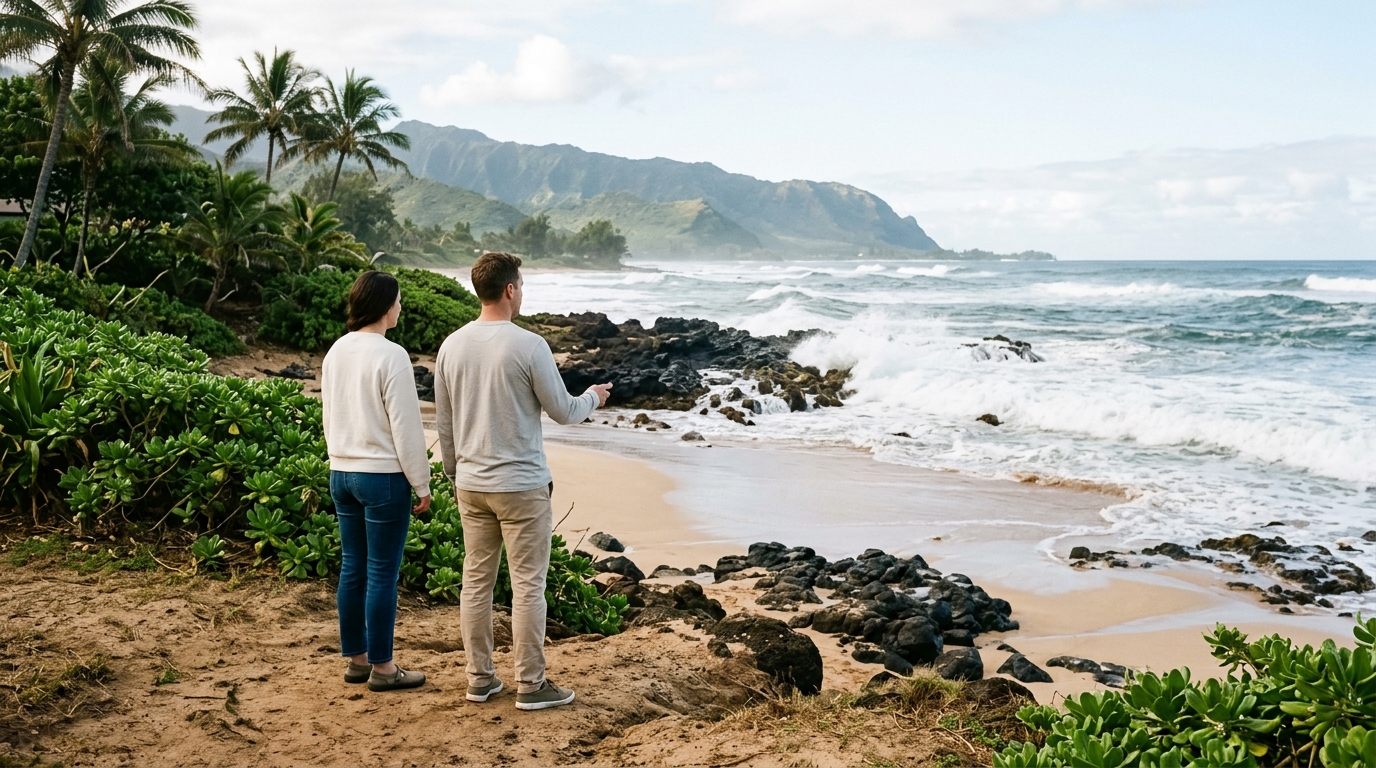
One of the biggest Maui tourist mistakes is treating the island like a checklist.
A traveler might plan breakfast in Kihei, a morning activity in another part of Maui, an afternoon attraction somewhere else, and sunset in a completely different region.
That schedule may look manageable on a map, but Maui travel is not only about mileage.
Road type, traffic, parking, weather, sightseeing stops and slower coastal routes can all affect the day.
What to do instead
Group activities by area.
For example, a South Maui day can stay focused around:
- Kihei
- Wailea
- nearby beaches
- local restaurants
- shopping
- coastal viewpoints
- a relaxed sunset stop
A different day can be reserved for a longer island excursion.
This approach reduces unnecessary driving and gives you more time to actually enjoy each destination.
For broader planning guidance, use our Maui Travel Tips guide when building your itinerary.
2. Assuming Maui Is Small Enough to Drive Everywhere Quickly
Maui may not look large compared with many mainland destinations, but distance alone does not tell you how long a trip will feel.
Some routes are straightforward. Others may involve winding roads, elevation changes, traffic, limited parking or weather changes.
A short distance on the map can therefore require more time and attention than expected.
What to do instead
Think in terms of regions, not only miles.
Important Maui travel areas include:
- South Maui
- Central Maui
- Upcountry Maui
- East Maui
- Haleakalā
- West Maui
If your accommodation is in Kihei or Wailea, plan several South Maui days instead of automatically crossing the island every morning.
This is also why choosing where to stay matters. Your hotel or condo becomes the starting point for almost every day of the trip.
3. Choosing Transportation Before Planning Your Itinerary
Many visitors decide how they will get around before deciding where they actually want to go.
That can lead to paying for transportation they barely use—or choosing something that does not fit longer-distance plans.
A rental car may make sense for travelers planning frequent trips across different parts of Maui.
Rideshare or taxis may work for occasional point-to-point trips.
Public transportation may suit certain routes.
A scooter or moped can be practical for eligible riders making appropriate local trips around Kihei, Wailea and nearby South Maui destinations.
What to do instead
Plan your activities first.
Then divide your transportation needs into categories:
Airport arrival: luggage-friendly transportation.
Long-distance island days: transportation suitable for longer routes.
Local South Maui days: walking, bus, rideshare, car, scooter or moped depending on the route and traveler.
The key mistake is assuming one transportation method must handle every part of the vacation.
Our guide to Maui transportation costs can also help you compare the real cost of different choices rather than looking only at the advertised daily rate.
4. Renting a Car for Every Day Without Checking Whether You Need It
For some travelers, a rental car for the entire vacation is absolutely practical.
For others, it may spend several days parked while they walk to breakfast, stay at the beach or explore a small section of South Maui.
Parking, fuel and rental days can add to the overall transportation budget.
What to do instead
Ask yourself:
- How many days will involve long-distance driving?
- How many days will stay around the accommodation?
- Can some local trips be done another way?
- Is parking included where you are staying?
- Will everyone in the group travel together?
Visitors staying in central Kihei, for example, may have different daily transportation needs from travelers staying somewhere more isolated.
If most of your itinerary remains local, read our guide to getting around Kihei without a car before automatically renting one for the full trip.
5. Treating a Scooter Like an All-Island Transportation Solution
Scooters and mopeds can be fun and practical for the right rider and the right route, but they should not be treated as a replacement for every type of transportation on Maui.
A local ride between parts of Kihei and nearby South Maui is very different from a long mountain, remote or cross-island trip.
Weather, road conditions, distance, rider experience and the type of vehicle all matter.
What to do instead
Use a scooter or moped where it makes sense.
For suitable riders, that may include shorter trips between:
- Kihei accommodations
- South Kihei Road
- restaurants
- nearby shopping
- local beaches
- Wailea
- selected South Maui stops
Maui Scooter Shack offers scooter and moped rentals in Kihei, including a complimentary lesson with rentals so riders can become familiar with the controls before leaving. Current rental requirements should always be confirmed for the specific vehicle.
Think of a scooter as one transportation option in your Maui plan—not automatically the only one.
6. Ignoring Ocean Conditions Because the Beach Looks Calm
One of the more serious Hawaii travel mistakes is judging ocean safety only by appearance.
A beach can look beautiful while still having strong currents, shorebreak or changing surf.
Hawaii Ocean Safety specifically advises visitors to read warning signs, choose lifeguarded beaches where possible and check conditions before entering the water. Conditions can also change quickly.
What to do instead
Before swimming or snorkeling:
- read posted warning signs;
- check current conditions;
- ask a lifeguard when available;
- stay within your swimming ability;
- avoid entering if conditions look beyond your experience;
- keep watching the ocean even after you arrive.
Do not assume that a popular beach is automatically safe under every condition.
This is especially important for first-time Hawaii visitors who may be unfamiliar with shorebreak, strong currents and rapidly changing surf.
7. Turning Your Back on the Ocean for the Perfect Photo
A scenic shoreline is an obvious place to take pictures, but getting too close to waves, wet rocks or exposed ledges can create unnecessary risk.
Hawaii Ocean Safety advises visitors to stay aware of waves near the shoreline and use caution when taking photos with the ocean behind them. Wet rocks and exposed shoreline areas can also become hazardous when waves reach farther than expected.
What to do instead
Choose a stable, dry viewing point.
Pay attention to:
- wet sand;
- wet rocks;
- changing wave patterns;
- barriers;
- warning signs;
- restricted areas.
The best viewpoint is not worth stepping somewhere unsafe.
8. Arriving at Haleakalā for Sunrise Without a Reservation
Haleakalā sunrise is one Maui experience where “we’ll figure it out when we get there” can fail.
Visitors entering the Summit District for sunrise between 3:00 a.m. and 7:00 a.m. need an advance reservation. Reservations are made online, and the National Park Service notes that they can be released up to 60 days in advance, with another portion released two days ahead.
What to do instead
If sunrise is important to your trip:
- Check the official Haleakalā National Park information early.
- Reserve the correct date.
- Confirm entrance requirements separately.
- Check current park conditions before traveling.
- Prepare for much colder temperatures at elevation.
Do not assume a warm beach day in Kihei means warm conditions at the Haleakalā summit. The National Park Service notes that temperatures and weather can differ dramatically with elevation.
9. Packing Only for Beach Weather
Visitors often picture Maui as permanently hot, dry and sunny.
That may match parts of a day in South Maui, but Maui contains very different environments.
Weather can change with elevation and location.
A morning near the ocean can feel very different from time spent Upcountry or near the summit of Haleakalā.
What to do instead
Pack in layers.
Depending on your itinerary, useful items may include:
- lightweight everyday clothing;
- comfortable walking shoes;
- a light layer;
- sun protection;
- rain protection where appropriate;
- warmer clothing for high-elevation plans;
- a reusable water bottle.
Pack for the activities you booked, not just the beach photo you have in mind.
10. Picking Accommodation Without Considering Location
A cheaper room is not always the cheaper vacation.
If your hotel, resort or condo is far from most of the places you plan to visit, you may spend more time and money getting around.
For travelers primarily interested in South Maui, choosing accommodation around Kihei or Wailea can create a very different daily experience from staying elsewhere on the island.
What to do instead
Before booking accommodation, map your top priorities.
Ask:
- Where are most of our planned activities?
- Do we want restaurants nearby?
- Will we cook some meals?
- Do we need parking?
- Will we spend most days at beaches?
- Do we want a resort-centered trip or an exploration-centered trip?
Our Maui hotel guide can help you compare areas before choosing where to stay.
11. Scheduling Every Hour of the Vacation
A completely packed itinerary often looks efficient before arrival.
Then real travel happens.
Lunch takes longer. A beach is better than expected. Traffic slows down. Weather changes. Someone wants an easy afternoon.
Suddenly the “perfect itinerary” becomes stressful.
What to do instead
Choose one or two priorities for the day.
Then build flexible activities around them.
A simple South Maui day might be:
Breakfast in Kihei → beach → lunch → optional Wailea stop → sunset.
That still gives you structure, but it leaves enough space to enjoy the trip instead of constantly checking the time.
12. Ignoring Local Rules, Signs and Community Boundaries
Maui is both a visitor destination and home to local communities.
A beautiful road, beach access point or piece of land is not automatically public.
Visitors can create problems by parking where they should not, entering restricted areas, blocking access or ignoring signs in search of a photo.
What to do instead
Use established access points.
Respect:
- private property;
- parking restrictions;
- trail rules;
- road closures;
- wildlife;
- cultural sites;
- beach and park regulations.
If a sign says an area is closed or restricted, treat that as the end of the route rather than a suggestion.
Responsible travel usually makes the experience better for both visitors and residents.
13. Getting Too Close to Sea Turtles and Other Wildlife
Seeing Hawaiian wildlife can be one of the most memorable parts of a Maui trip.
The mistake is turning that moment into an attempt to get as close as possible.
Hawaii’s Division of Aquatic Resources advises people to give sea turtles space and cites current federal guidance of at least 10 feet (3 meters) for viewing sea turtles.
What to do instead
Watch wildlife from a respectful distance.
Do not:
- touch;
- chase;
- surround;
- block;
- feed;
- crowd an animal for a photo.
Let the wildlife determine where it wants to go.
14. Assuming the Cheapest Transportation Option Is Always the Best Value
The lowest upfront price does not always produce the lowest total trip cost.
A transportation option can become inconvenient if it requires repeated transfers, expensive parking, frequent rideshare trips or unnecessary rental days.
What to do instead
Compare the full travel pattern.
For example:
Traveler A: Plans multiple long-distance days. A rental car may provide the flexibility needed.
Traveler B: Stays mostly around Kihei and Wailea with only one longer excursion. Combining transportation options may make more sense.
Traveler C: Has airport luggage but wants local transportation later. A conventional airport transfer followed by a local transportation option can be more practical than expecting one vehicle to handle everything.
Plan around the trip you are actually taking.
15. Forgetting That Kihei, Wailea and South Maui Work Well as a Local Cluster
Some visitors plan every day around famous attractions scattered across Maui and overlook how much can be done closer to their accommodation.
Kihei and Wailea connect many South Maui experiences within the same general coastal area.
Depending on where you stay, a local day can combine beaches, food, shopping, parks and sunset without turning into an all-day drive.
What to do instead
Build at least one or two intentionally local days into the itinerary.
This can reduce driving while giving you more time to explore at a relaxed pace.
If you are staying in Kihei, our guides to things to do in Kihei, South Maui beaches, and Maui Travel Tips can help you build those days.
The Better Maui Approach: Plan Less Distance, Not Less Fun
Avoiding common Maui travel mistakes does not require planning every detail.
It means making a few good decisions before arrival:
- Stay near the places you actually want to visit.
- Group activities by region.
- Use the right transportation for each type of day.
- Check weather, road and ocean conditions.
- Reserve limited-access experiences early.
- Leave space in the itinerary.
- Respect local communities, wildlife and posted rules.
That approach usually creates a trip that feels easier rather than more restricted.
Exploring Kihei and South Maui After You Arrive
If several days of your trip stay around Kihei, Wailea and nearby South Maui destinations, local transportation becomes a different question from airport transfers or full-island driving.
Eligible riders can consider scooter or moped rentals in Kihei for appropriate shorter trips.
Maui Scooter Shack offers 49cc/50cc options along with other scooters, and rentals include a complimentary lesson.
The goal is not to use a scooter for every Maui trip. It is to choose transportation that fits the route.
For local South Maui days, that can mean spending less time thinking about how to cross the island and more time enjoying the area where you are already staying.
Frequently Asked Questions About Maui Travel Mistakes
What is the biggest mistake first-time visitors make in Maui?
Trying to fit too many distant places into one day is one of the most common mistakes. Maui travel is easier when activities are grouped by region. A South Maui day, for example, can focus on Kihei, Wailea, nearby beaches, restaurants and sunset instead of repeatedly crossing the island.
Is it a mistake to rent a car for an entire Maui vacation?
Not necessarily. A full-trip rental car can be useful for travelers planning frequent long-distance trips. However, visitors staying mainly around Kihei or Wailea may want to compare the cost and convenience of combining transportation options rather than automatically paying for a car every day.
Do I need to reserve Maui attractions before my trip?
Some experiences require or strongly benefit from advance planning. Haleakalā sunrise is a clear example: an advance reservation is required to enter the Summit District between 3:00 a.m. and 7:00 a.m. Always verify current reservation requirements directly with the attraction or managing agency before your visit.
Is it safe to swim at any Maui beach if the water looks calm?
No. Appearance alone does not determine ocean safety. Currents, shorebreak and surf conditions can change, and hazards may not always be obvious. Choose lifeguarded beaches when possible, read warning signs and ask a lifeguard about current conditions before entering.
Should I use a scooter for sightseeing around Maui?
A scooter can work well for appropriate local trips, especially around areas such as Kihei and nearby South Maui, when the rider, route and conditions are suitable. It should not automatically be treated as the best option for remote, mountain or long-distance trips.
Is Kihei a good base if I do not want to drive all day?
Kihei can be practical for travelers who plan to spend significant time in South Maui because beaches, restaurants, shops and nearby Wailea are concentrated in the same general coastal area. The exact convenience depends on where your accommodation is located and what activities you plan.
How can tourists avoid overplanning a Maui vacation?
Choose one or two important activities per day and keep the remaining schedule flexible. Group nearby stops together, leave room for weather and traffic changes, and avoid treating every popular Maui attraction as mandatory.
Plan a Smarter South Maui Trip
The best Maui vacation is not necessarily the one with the most stops.
Choose the right base, plan realistic days, respect ocean and road conditions, and match your transportation to the distance you actually need to travel.
If your plans include several local days around Kihei, Wailea and South Maui, compare Maui Scooter Shack’s scooter and moped rental options and choose a ride that fits your local itinerary.